
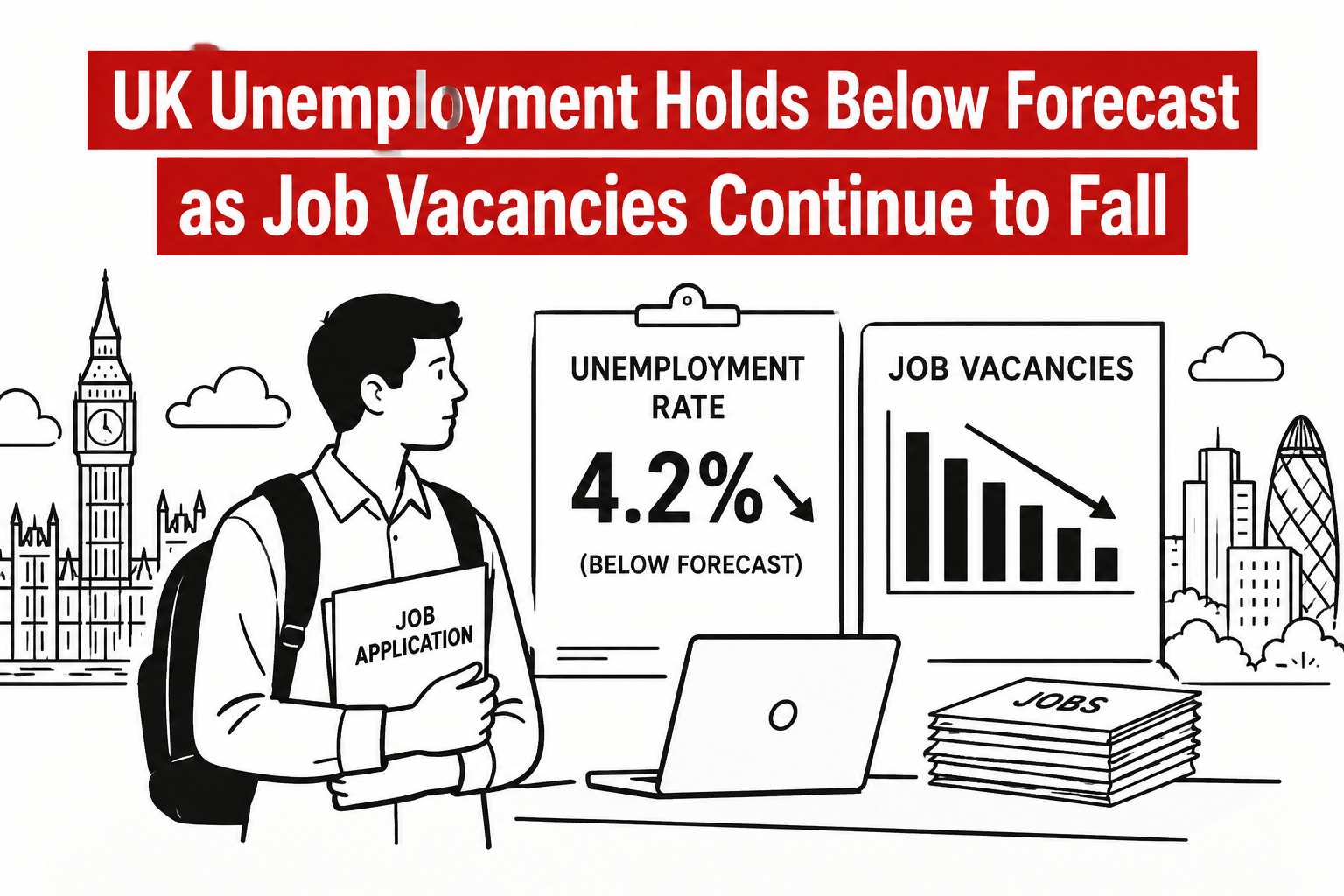
UK Unemployment Holds Below Forecast as Job Vacancies Continue to Fall
UK unemployment remained below expectations in the latest figures, but continued declines in job vacancies and payroll employment point to a softer labour market.
The UK’s unemployment rate remained at 4.9%, unchanged for a fourth consecutive month and below the 5.0% level economists had forecast.
However, the latest employment figures also showed continued weakness in hiring, with the number of people on company payrolls falling and vacancies declining further across the UK.
Vacancies Continue to Decline
The number of job vacancies fell to around 702,000 in the three months to August, marking the lowest level recorded outside the coronavirus pandemic period since 2014.
The continued decline suggests that employers are becoming more cautious about recruitment, with fewer opportunities available to people looking for work.
Although unemployment has remained relatively stable, the fall in vacancies provides another indication that demand for workers is weakening.
Payroll Employment Falls
UK payroll employment also declined during August, falling by 26,000 following a revised fall of 19,000 in July.
Private-sector payrolls experienced a larger decline, falling by around 34,000 during the month. Retail and hospitality were among the sectors recording notable reductions.
The figures highlight the contrast between the relatively stable unemployment rate and the weaker employment conditions being seen across parts of the economy.
Wage Growth Remains Elevated
Despite the weaker hiring environment, regular pay growth remained at 3.5% in the latest figures.
Total earnings growth, which includes bonuses, slowed to 3.9%. Wage growth therefore continues to provide support for household incomes, although it is moderating from higher levels seen previously.
Changes in wages are also being closely watched as businesses continue to manage rising employment costs and wider economic pressures.
Businesses Become More Cautious
The latest labour market figures suggest that employers are becoming more cautious about taking on additional staff.
Smaller businesses in particular have reported pressure from higher labour costs, which can make recruitment more difficult when companies are already managing tight budgets.
At the same time, the growing number of people competing for fewer vacancies could gradually increase competition for available positions.
What the Figures Mean for the UK Labour Market
The combination of stable unemployment, falling payroll employment and declining vacancies presents a mixed picture of the UK’s labour market.
The unemployment rate has not increased in the latest figures, but the continued reduction in vacancies indicates that employers are creating fewer new opportunities.
For workers, this could mean greater competition for available jobs, while businesses may have access to a larger pool of potential candidates as hiring demand slows.
The latest figures will also be closely monitored as policymakers assess the condition of the UK economy and the direction of employment, wages and recruitment in the months ahead.