
UK Unemployment Holds Below Forecast as Job Vacancies Continue to Fall


UK Unemployment Holds Below Forecast as Job Vacancies Continue to Fall

UK Unemployment Holds Below Forecast as Job Vacancies Continue to Fall

UK unemployment remained below expectations in the latest figures, but continued declines in job vacancies and payroll employment point to a softer labour market.

The UK’s unemployment rate remained at 4.9%, unchanged for a fourth consecutive month and below the 5.0% level economists had forecast.

However, the latest employment figures also showed continued weakness in hiring, with the number of people on company payrolls falling and vacancies declining further across the UK.

Vacancies Continue to Decline

The number of job vacancies fell to around 702,000 in the three months to August, marking the lowest level recorded outside the coronavirus pandemic period since 2014.

The continued decline suggests that employers are becoming more cautious about recruitment, with fewer opportunities available to people looking for work.

Although unemployment has remained relatively stable, the fall in vacancies provides another indication that demand for workers is weakening.

Payroll Employment Falls

UK payroll employment also declined during August, falling by 26,000 following a revised fall of 19,000 in July.

Private-sector payrolls experienced a larger decline, falling by around 34,000 during the month. Retail and hospitality were among the sectors recording notable reductions.

The figures highlight the contrast between the relatively stable unemployment rate and the weaker employment conditions being seen across parts of the economy.

Wage Growth Remains Elevated

Despite the weaker hiring environment, regular pay growth remained at 3.5% in the latest figures.

Total earnings growth, which includes bonuses, slowed to 3.9%. Wage growth therefore continues to provide support for household incomes, although it is moderating from higher levels seen previously.

Changes in wages are also being closely watched as businesses continue to manage rising employment costs and wider economic pressures.

Businesses Become More Cautious

The latest labour market figures suggest that employers are becoming more cautious about taking on additional staff.

Smaller businesses in particular have reported pressure from higher labour costs, which can make recruitment more difficult when companies are already managing tight budgets.

At the same time, the growing number of people competing for fewer vacancies could gradually increase competition for available positions.

What the Figures Mean for the UK Labour Market

The combination of stable unemployment, falling payroll employment and declining vacancies presents a mixed picture of the UK’s labour market.

The unemployment rate has not increased in the latest figures, but the continued reduction in vacancies indicates that employers are creating fewer new opportunities.

For workers, this could mean greater competition for available jobs, while businesses may have access to a larger pool of potential candidates as hiring demand slows.

The latest figures will also be closely monitored as policymakers assess the condition of the UK economy and the direction of employment, wages and recruitment in the months ahead.
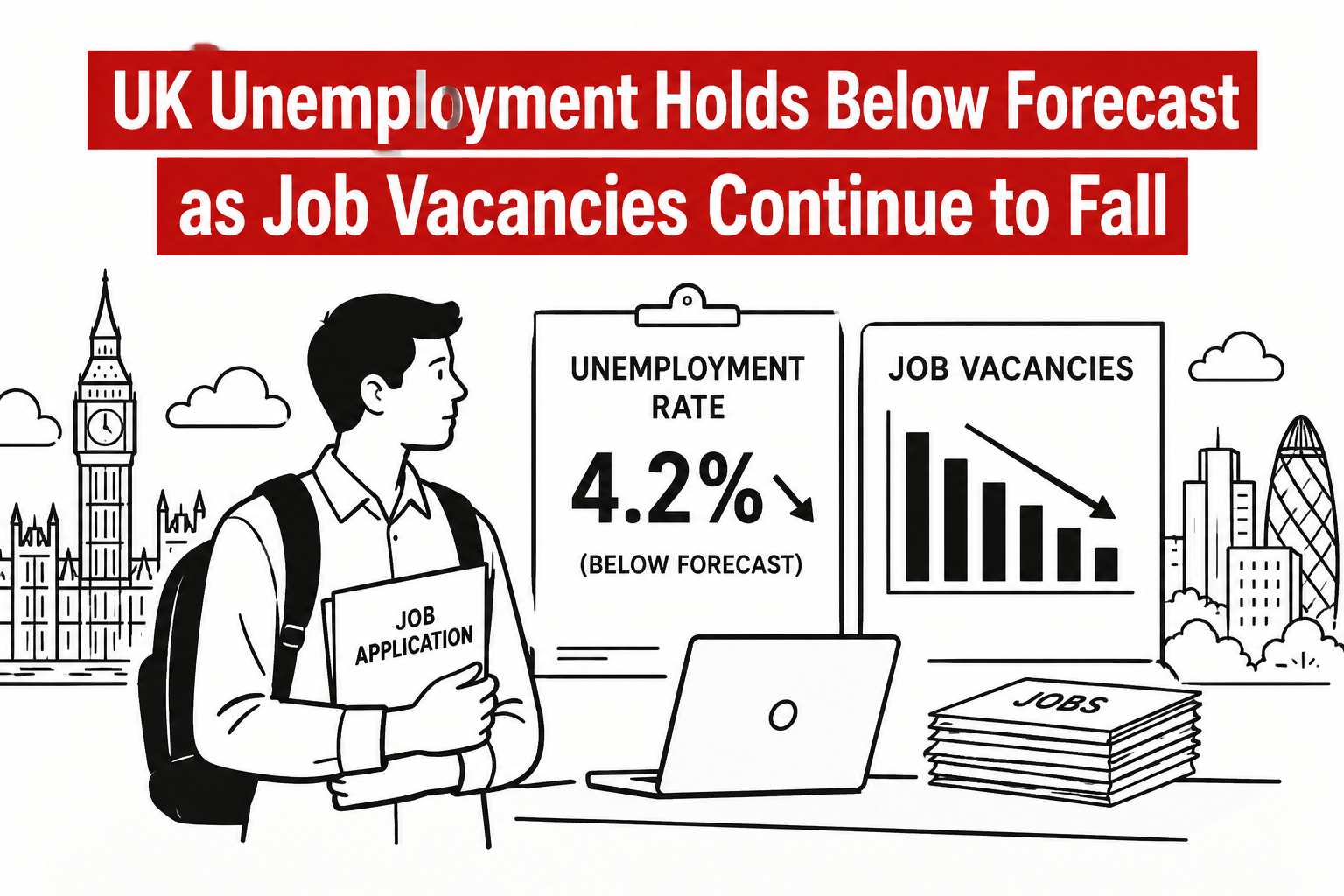

UK Unemployment Holds at 4.9% as Job Vacancies Fall to Lowest Level in a Decade


UK Unemployment Holds Below Forecast as Job Vacancies Continue to Fall

UK Unemployment Holds Below Forecast as Job Vacancies Continue to Fall

UK unemployment remained below expectations in the latest figures, but continued declines in job vacancies and payroll employment point to a softer labour market.

The UK’s unemployment rate remained at 4.9%, unchanged for a fourth consecutive month and below the 5.0% level economists had forecast.

However, the latest employment figures also showed continued weakness in hiring, with the number of people on company payrolls falling and vacancies declining further across the UK.

Vacancies Continue to Decline

The number of job vacancies fell to around 702,000 in the three months to August, marking the lowest level recorded outside the coronavirus pandemic period since 2014.

The continued decline suggests that employers are becoming more cautious about recruitment, with fewer opportunities available to people looking for work.

Although unemployment has remained relatively stable, the fall in vacancies provides another indication that demand for workers is weakening.

Payroll Employment Falls

UK payroll employment also declined during August, falling by 26,000 following a revised fall of 19,000 in July.

Private-sector payrolls experienced a larger decline, falling by around 34,000 during the month. Retail and hospitality were among the sectors recording notable reductions.

The figures highlight the contrast between the relatively stable unemployment rate and the weaker employment conditions being seen across parts of the economy.

Wage Growth Remains Elevated

Despite the weaker hiring environment, regular pay growth remained at 3.5% in the latest figures.

Total earnings growth, which includes bonuses, slowed to 3.9%. Wage growth therefore continues to provide support for household incomes, although it is moderating from higher levels seen previously.

Changes in wages are also being closely watched as businesses continue to manage rising employment costs and wider economic pressures.

Businesses Become More Cautious

The latest labour market figures suggest that employers are becoming more cautious about taking on additional staff.

Smaller businesses in particular have reported pressure from higher labour costs, which can make recruitment more difficult when companies are already managing tight budgets.

At the same time, the growing number of people competing for fewer vacancies could gradually increase competition for available positions.

What the Figures Mean for the UK Labour Market

The combination of stable unemployment, falling payroll employment and declining vacancies presents a mixed picture of the UK’s labour market.

The unemployment rate has not increased in the latest figures, but the continued reduction in vacancies indicates that employers are creating fewer new opportunities.

For workers, this could mean greater competition for available jobs, while businesses may have access to a larger pool of potential candidates as hiring demand slows.

The latest figures will also be closely monitored as policymakers assess the condition of the UK economy and the direction of employment, wages and recruitment in the months ahead.


Big Payroll Changes Coming in 2026

Big Payroll Changes Are Coming — And UK Businesses Must Act Now

Major changes to UK payroll are on the way, driven by artificial intelligence, tighter HMRC reporting requirements, and updated rules around employee benefits. Automation is transforming how businesses calculate pay and manage compliance, while new digital reporting standards mean less room for error and greater scrutiny from tax authorities. Employers who fail to adapt risk penalties, inefficiencies, and unexpected tax costs. Reviewing payroll systems, updating processes, and staying ahead of regulatory updates will be essential for businesses looking to remain compliant and competitive in 2026.

Roofing Gang – Liverpool

Roofing Gang Required – Liverpool

We’re currently looking for an experienced roofing gang to join a project based in Liverpool, with work available to start immediately.

Applicants must have previous roofing experience, a solid understanding of health and safety on site, and the ability to deliver high-quality work within deadlines. Each team member should hold the relevant qualifications or CSCS cards, and a current CV will be required.

This project forms part of an £18 million new housing development, offering long-term, consistent work for the right team.

It’s a great opportunity for reliable and skilled roofers who take pride in their craft and want to work on a well-organised, professional site.

If you’re interested in this role, or would like to register for future opportunities, please contact our team on 01229 226792 or email your CV to hello@birkrigg.co.uk
.

Hello world!

Hello World! 👋

We are thrilled to welcome you to our new website, the official online home of Birkrigg!

This website is designed to be your go-to source for everything you need to know about our company. From day one, our goal has been to make information clear, accessible, and up-to-date, so whether you’re a customer, partner, or simply curious about what we do, you’ll always know where to look.

Our vision for this website is that it will grow and evolve alongside our company, becoming a trusted resource for everyone involved with us. Over time, we plan to include more features, updates, and insights so that you always have the latest information at your fingertips.

A little about Birkrigg: we were founded on the principle of helping people remain tax-efficient while staying fully HMRC-compliant. We provide payroll and financial solutions for contractors and temporary workers across the UK. Our approach combines competitive pricing with personalised service, ensuring every client receives the attention and support they deserve. We pride ourselves on fast turnaround times, excellent customer service, and outstanding results.

But Birkrigg is more than just numbers and compliance; we are about people. Our mission is to make financial processes as smooth and stress-free as possible so that our clients can focus on what matters most: their work, their business, their goals, and their lives.

This blog will be regularly updated with company news, industry insights, helpful tips, and behind-the-scenes stories. Whether it’s updates on our services, guidance for contractors, or exciting developments within the company, you’ll find it all here.

We genuinely look forward to building a strong community around Birkrigg. Thank you for visiting, and make sure to check back often as there’s plenty more to come!

The Birkrigg Team